Delhi Scrap Prices Today: Comprehensive Overview of Metal Scrap Rates
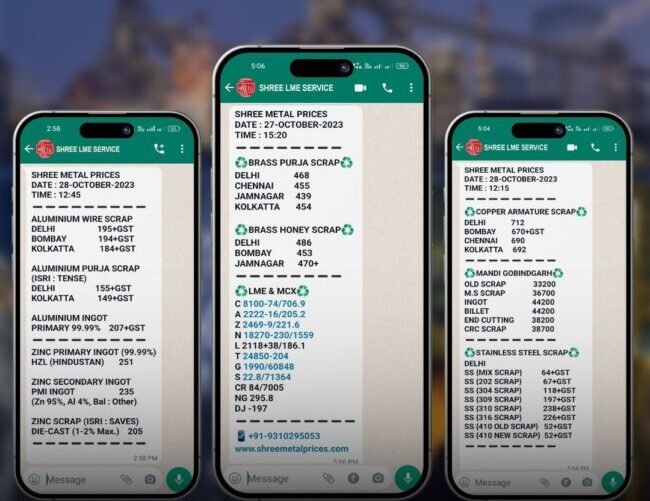
As of today, Delhi’s local scrap market showcases various per kg rates for metals like Copper, Brass, Aluminium, Lead, Zinc, Nickel, and Tin. Understanding these rates is crucial for scrap dealers, buyers, and sellers looking to make informed decisions in the market.
Note: Delhi Rate Update will be at 12:00 PM
💥Click for: CURRENT DELHI SCRAP PRICES💥
| Delhi Metal Market Rates 15 SEPTEMBER 2026 | |
|---|---|
| COPPER/-KG | |
| Armature (BHATTI) | ₹1420 |
| Armature (PLANT) | ₹1422 |
| CC Rod | ₹1545 |
| CCR Rod (1.6MM ₹1508) | ₹1498 |
| Super D Rod (1.6MM ₹1502) | ₹1488 |
| Kaliya Rod (1.6MM ₹1496) | ₹1482 |
| BRASS SCRAP/-KG | |
| Purja | ₹946 |
| Honey | ₹986 |
| Chadri | ₹976 |
| ALUMINIUM/-KG | |
| Wire Scrap | ₹336+ |
| Purja (Local) | ₹253+ |
| Purja (Engine Import) | ₹257+ |
| Bartan Scrap | ₹295+ |
| Company Rod | ₹370+ (WIE20) |
| Local Rod | ₹350+ |
| Company Ingot | ₹355+ |
| LEAD/-KG | |
| Soft | ₹196+ |
| Hard | ₹206+ |
| White Battery Scrap | ₹117.5+ |
| GUN METAL/-KG | |
| Mix | ₹1113 |
| Local | ₹1103 |
| Jalndhar | ₹1133 |
| ZINC SCRAP/-KG | |
| Standard Dhada | ₹352 |
| Die-Cast Scrap | ₹362 |
| Big Size Tukdi | ₹372 |
| Regular Size Tukdi | ₹365 |
| Small Size Tukdi | ₹353 |
| ZINC INGOTS/-KG | |
| Hindustan Zinc | ₹453 |
| PMI | ₹412 |
| Australia | ₹491 |
| Zamak 3 | ₹463 |
| Zamak 5 | ₹470 |
| NICKEL & TIN/-KG | |
| Nickel Cathode | ₹1710 |
| Tin Ingot | ₹5775 (INDO) |
This price guide helps you stay on top of the current rates in the Delhi metal market, crucial for anyone dealing in scrap metals or looking to trade. Whether you’re buying or selling copper, aluminium, brass, lead, or zinc, having real-time price updates ensures you make informed decisions.

Why is it important to track Delhi scrap prices today?
Keeping track of Delhi scrap prices helps traders, recyclers, and manufacturers make informed buying decisions. Daily price updates improve profit planning and provide valuable insights into future market trends driven by supply-demand dynamics and global metal movements.
🔹 Market Trend Summary (Updated)
Copper: 🔼 Upward — supported by persistent supply-side concerns, tight physical conditions and recent disruptions to major mine output.
Brass (Delhi): ⚖️ Stable to Upward — supported by firm copper prices and stable physical-market indications.
Aluminium (MCX): 🔼 Upward — strengthened by firm global prices and positive Asian-market sentiment, with SHFE aluminium also trading higher.
Lead (MCX): ⚖️ Stable — moving in a narrow range as demand and supply remain broadly balanced.
Zinc (MCX): 🔼 Upward — supported by positive Asian trading, firm spot conditions and ongoing supply-side concerns.
Nickel (MCX): 🔽 Downward — pressured by weaker stainless-steel demand and continued inventory concerns.
Tin (Delhi): 🔼 Upward — supported by firm Asian prices and elevated global tin levels, despite cautious physical-market buying.
We also provide rates for other cities.
- MUMBAI SCRAP PRICES
- ZINC SCRAP PRICES
- KOLKATA SCRAP PRICES
- MANDI GOBINDGARH SCRAP PRICES
- All India Copper Scrap Rates
- Iron scrap rate today
- Brass Scrap Rates Today
- Ahmedabad Scrap Prices Today
- Chennai Scrap Prices Today
🔄 Factors Behind Scrap Price Fluctuations in Delhi
1. Industrial & Manufacturing Demand
Demand from steel plants, foundries, cable manufacturers, engineering units, and other industries directly affects scrap prices. Higher consumption generally puts upward pressure on rates.
2. Domestic Scrap Supply
Scrap generated from demolition, manufacturing units, fabrication work, and local collection networks influences Delhi’s available supply. Tight supply can lead to higher prices.
3. International Metal Prices
Delhi scrap prices are influenced by global movements in copper, aluminium, zinc, nickel, lead, and other base metals. Changes in LME, SHFE, and other international benchmarks can quickly affect domestic market sentiment.
4. Import & Export Activity
Imported scrap availability, freight rates, port costs, and international trade policies can change the supply-demand balance. Higher import costs or reduced availability may support domestic scrap prices.
5. Transportation & Fuel Costs
Diesel prices, freight charges, vehicle availability, and logistical disruptions affect the cost of collecting and transporting scrap, ultimately influencing market rates.
6. Currency Exchange Rate
Movements in the Indian Rupee against the US Dollar can affect the landed cost of imported metals and scrap. A weaker rupee can increase import costs and provide support to domestic prices.
7. Government Policies & Trade Regulations
Changes in import duties, GST, environmental regulations, recycling policies, and other government measures can affect the cost, availability, and movement of scrap materials.
8. Seasonal Demand & Weather Conditions
Monsoon conditions, festive periods, construction cycles, and seasonal industrial activity can temporarily affect scrap collection, transportation, and consumption.
9. Global Economic Conditions
Economic growth, infrastructure investment, manufacturing activity, interest rates, and industrial demand in major economies such as China, the US, and Europe can influence global base-metal prices and, consequently, Indian scrap markets.
10. Inventory Levels & Market Sentiment
Warehouse inventories, dealer stocks, mill buying, and overall market sentiment play an important role. Lower inventories combined with strong buying interest can support prices, while excess stocks and weak demand may trigger price corrections.
For the most reliable updates on Delhi scrap price today, CONTACT NOW for current PRICES trends and future forecasts.